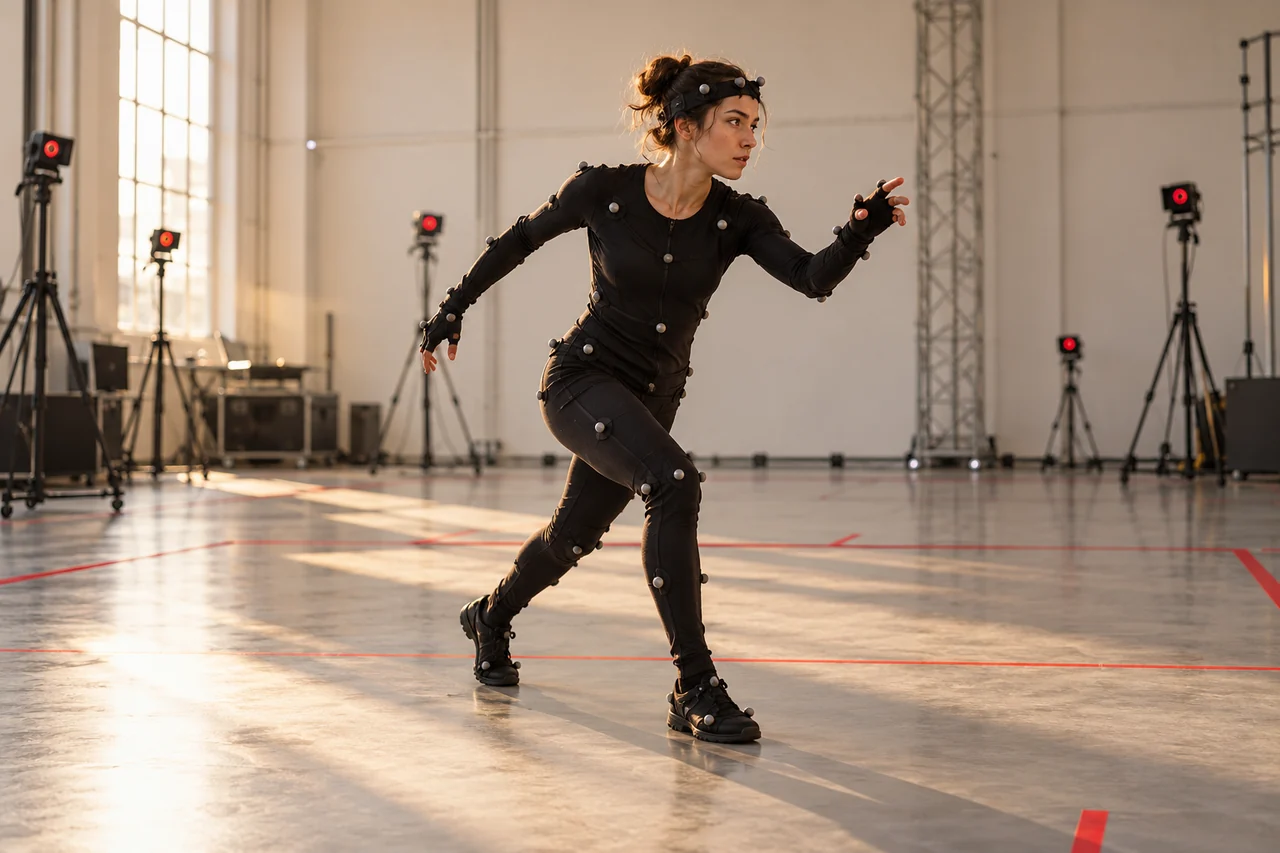
Design VR locomotion around choice and orientation
Select and tune VR movement methods around task needs, spatial understanding and user preference, with clear transitions and reliable recovery controls.
3 MIN READ
Spatial interaction, presence and experiences beyond the flat screen.
 THE EDITOR’S OPENING READ
Decide when a task benefits from spatial content, mixed reality or full immersion by testing the user outcome and the cost of changing context.
Read the story25 articles · Page 1 of 3
Select and tune VR movement methods around task needs, spatial understanding and user preference, with clear transitions and reliable recovery controls.
3 MIN READ
Arrange spatial tools and content around reach, viewing distance and task frequency so an immersive workspace remains usable across different bodies and postures.
3 MIN READ
Build hand interactions with clear acquisition, stable manipulation and graceful tracking loss so natural gestures remain understandable under imperfect conditions.
3 MIN READ
Create controller interactions around user intent, adaptable bindings and clear feedback so an immersive application can support different hardware coherently.
3 MIN READ
Design gaze-assisted selection with clear target spacing, restrained hover feedback and separate confirmation so looking around does not trigger unwanted actions.
3 MIN READ
Guide users from their actual room into a usable spatial session with realistic space requirements, adaptable placement and clear interruption behavior.
3 MIN READ
Integrate depth-based occlusion around its visual purpose, device support and uncertainty so virtual objects stay understandable when real geometry is imperfect.
3 MIN READ
Organize spatial anchors around object relationships, persistence needs and recovery so placed content can return coherently as environments evolve.
3 MIN READ
Guide AR placement with stable previews, meaningful surface constraints and simple adjustment so users can position content despite evolving scene estimates.
3 MIN READ
Design text, controls and overlays for changing physical backgrounds so mixed reality interfaces remain readable beyond a carefully staged demonstration room.
3 MIN READ
Assign spatial sounds to clear sources and priorities so audio helps people locate activity, understand feedback and remain oriented without overwhelming the scene.
3 MIN READ