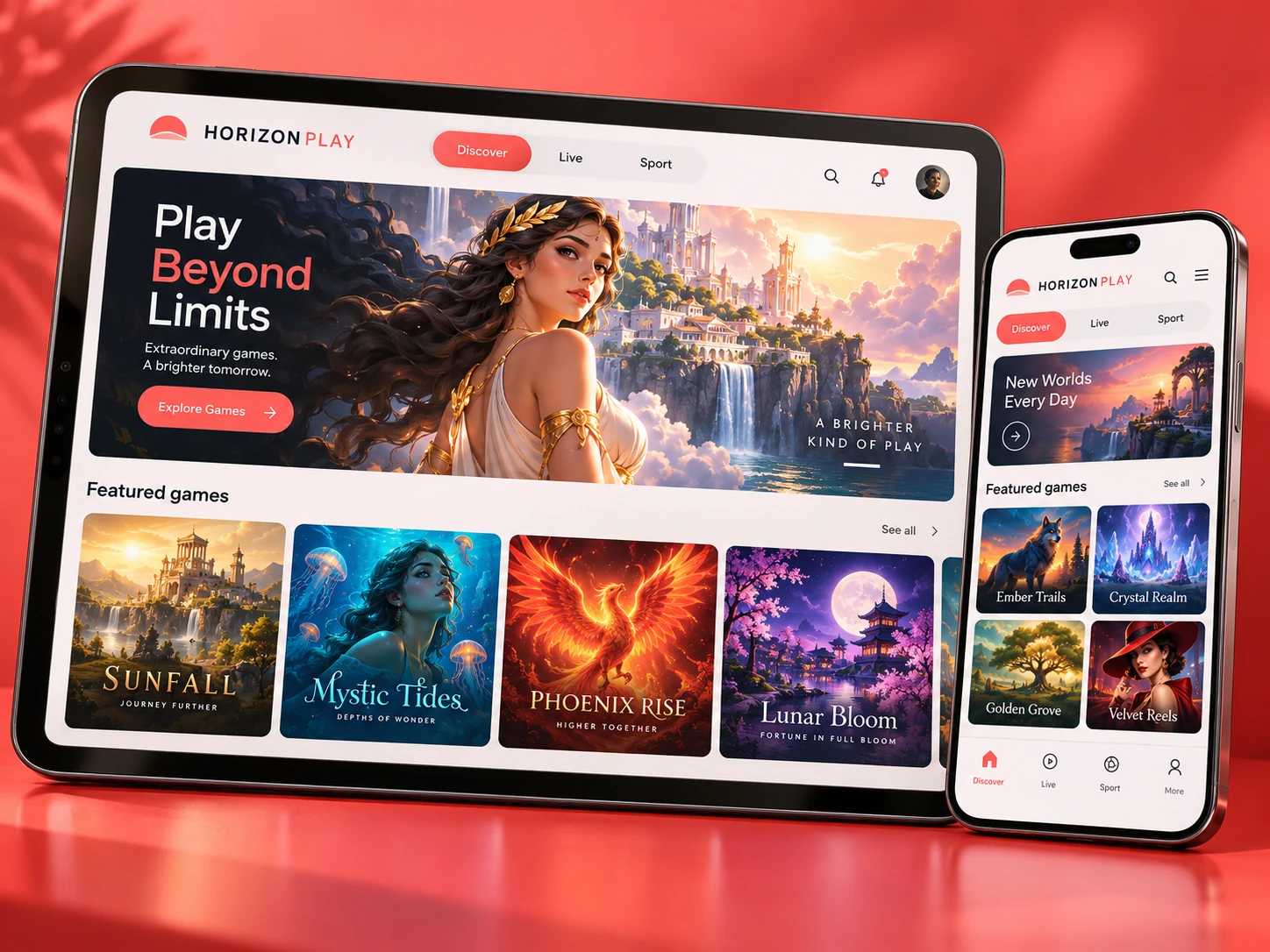
A mobile lobby has limited space and a demanding job. It must explain the available content, keep account information accessible and let customers understand where they are without overwhelming them with competing promotions. The temptation is to use every visible area for another banner or game tile. That often makes the page feel busy while leaving basic tasks harder to complete. A clearer lobby begins with information architecture and readable content. Visual energy can support the brand, but it should never obscure controls, rules or the distinction between navigation and a transaction.
Prioritise the first useful decisions
Identify the actions a customer needs at each stage: understand the product, locate a category, inspect a game, find account details or get help. Give these tasks a stable position rather than moving them whenever a campaign changes. Separate persistent navigation from temporary editorial placements. A first-time visitor should not need to dismiss several overlays before learning what the platform contains. During research, ask participants to locate specific information without coaching. Their route through the page will reveal whether the architecture reflects actual needs or the internal organisation of the content catalogue.
Make game cards informative
Artwork can distinguish titles, but a card should also provide a readable name and a predictable route to relevant information. Avoid placing essential details only in hover states that do not exist on touch devices. Where appropriate, provide a separate information view before launch, with the rules and explanations relevant to the game. The Gambling Commission’s RTS 3 is a useful Great Britain-specific reference for game information expectations. The implementation should follow the applicable market rules while ensuring that customers can find and understand the information on a small screen.
Control visual competition
Establish a hierarchy for headings, cards, notices and account actions. Limit the number of elements demanding immediate attention at once. Animation should not make a moving promotion more visually prominent than an important account message. Preserve readable contrast over artwork and give controls stable dimensions as images load. Test the page with unusually long game names and missing artwork. A robust design still makes sense when promotional assets are delayed or unavailable. The lobby is part of an operating product, not a fixed composition that only works with perfect content.
Treat account access as part of the lobby
Balance information, transaction history, protection settings and help should be reachable through predictable controls. Do not hide these behind unfamiliar symbols without labels. When a customer returns from a game, restore useful context instead of resetting every filter and scroll position. Make any pending state visible without implying that it has completed. Test the journey with one hand, larger text settings and a slower connection. These ordinary conditions often expose problems that disappear in a desktop design review or an uninterrupted demonstration on a high-end phone.
Measure clarity without rewarding harmful patterns
Evaluate task completion, error recovery, support requests and the ability to locate important information. Avoid treating longer sessions or repeated deposits as universal evidence of a better experience. Product experiments need guardrails tied to customer protection and the applicable rules. For example, a navigation change may reduce the time required to find account settings without altering commercial messaging. A good mobile lobby gives customers clearer choices and a more predictable experience. That is a meaningful design outcome even when the improvement is subtle rather than visually dramatic.
The key decisions.
- Organise the lobby around customer tasks before campaign placements.
- Keep game information and account controls accessible on touch devices.
- Evaluate clarity and safety alongside commercial performance.
Sources & further reading
Primary references for the concepts discussed. Check the applicable documentation when planning implementation.